WHAT STRUTS DO
Purpose of Struts
In the mid 1970s, domestic automakers began the transition from producing large rear-wheel drive vehicles to producing lighter, more fuel-efficient front-wheel drive vehicles. Along with this transition came many changes to the typical suspension system. For decades, the majority of passenger cars came equipped with short-arm/long-arm suspension systems, which are frequently called SLA’s.
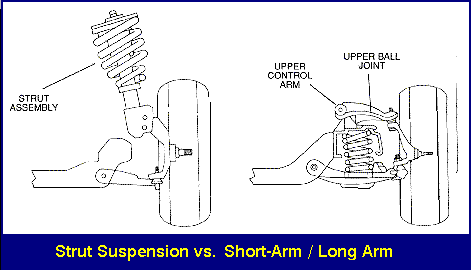
But with the advent of smaller, front-wheel drive vehicles, under-hood space became a premium and most front-wheel drive vehicles simply don’t have enough room for a short-arm/long-arm suspension system. As a result, the MacPherson strut suspension is now the standard suspension for all front-wheel vehicles and most rear-wheel drive vehicles.
When comparing the typical SLA suspension with the strut suspension we see that the strut suspension is taller than the SLA but does not require an upper control arm, pivot shaft or bushings. This reduction in parts helps allow the strut suspension to provide a lightweight, space efficient suspension system that is ideal for a variety of applications.
Strut Operation
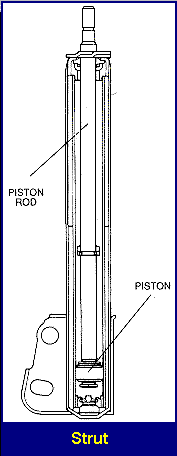
Struts perform two main jobs. First, struts perform a shock damping function like shock absorbers. Internally, a strut is similar to a shock absorber. A piston is attached to the end of the piston rod and works against hydraulic fluid to control spring and suspension movement. Just like shock absorbers, the valving generates resistance to pumping forces created by the up and down motions of the suspension.
Also like shock absorbers, a strut is velocity sensitive, meaning that it is valved so that the amount of resistance can increase or decrease, depending on how fast the suspension moves.
Struts also perform a second job. Unlike shock absorbers, struts provide structural support for the vehicle’s suspension. As a result, struts affect riding comfort and handling, as well as vehicle control, braking, steering, wheel alignment and wear on other suspension components, including the tyres.